

Flat Roof Systems

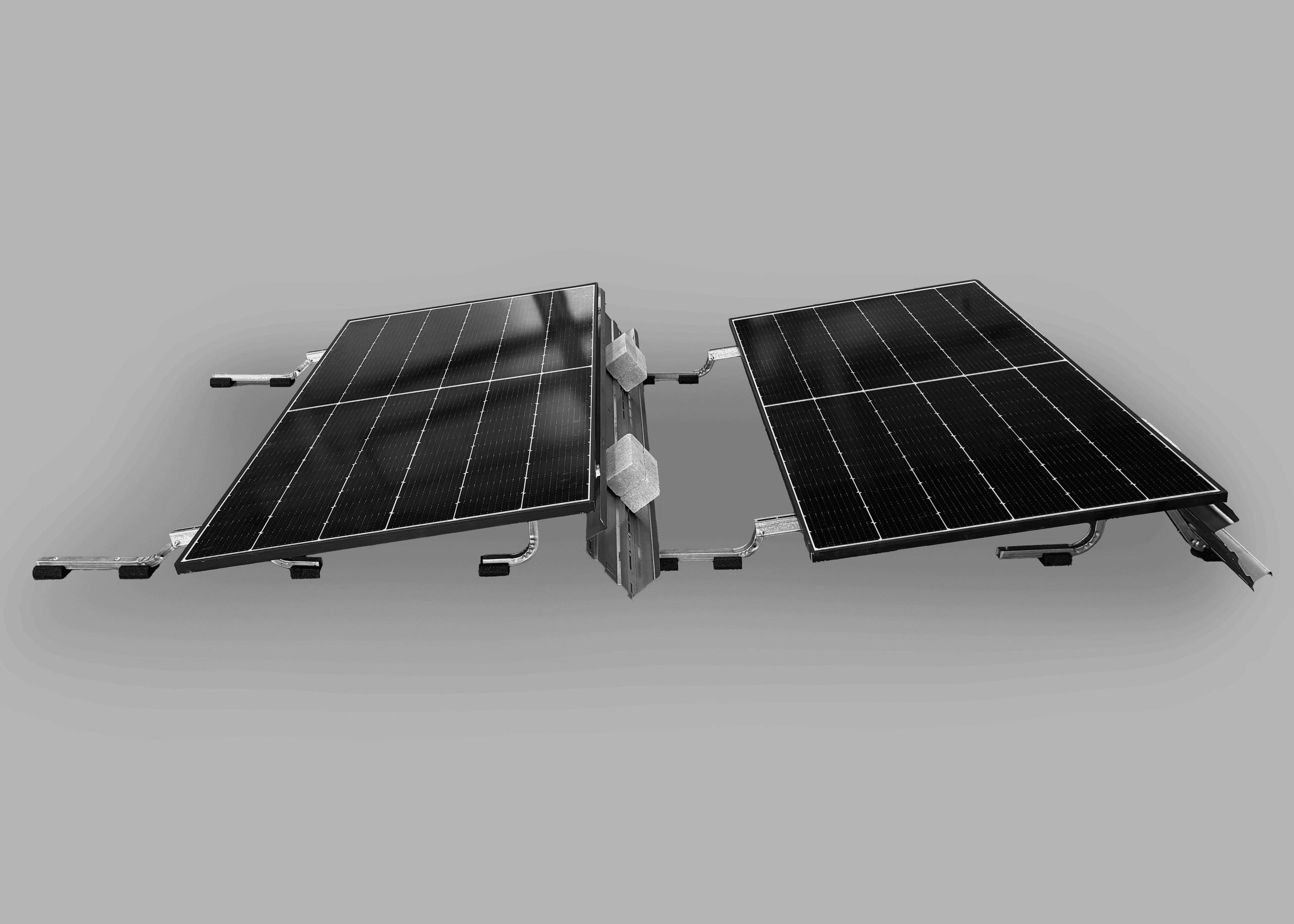
East West Tegra
With this system we can create an east west split for the solar panels, which reduces the space required between the rows of solar panels and in some cases, allow more solar panels to fit on the roof.
We’ve incorporated aerodynamic principles into the design so that the system uses the effects of the wind uplift to create suction against the roof, which in turn, dramatically reduces the amount of additional ballast.
We apply a separation layer to the underside of each and every support foot prior to delivery so that it’s ready to be used with the reassurance that it will protect the existing roofing material.
We even supply the system with the ballast.

Light Tegra
We’ve taken great care in designing a system that is really quick and simple to install but also requires a minimal amount of ballast. The design incorporates aerodynamic principles, which allow the system to use the effects of the wind uplift to its benefit and effectively self-ballasts.
We’ve taken significant steps to ensure that our system complies and protects the existing roof covering by applying a separation layer to the bottom of the support feet prior to delivery. The support feet are also slightly curved around the edges to avoid any sharp edges, so that they don’t damage the existing roof covering.
We’ve incorporated aerodynamic principles into the design so that the system used the effects of the wind uplift to create suction against the roof, which in turn, dramatically reduces the amount of additional ballast. We even supply the system with the ballast.
PB III HD
With its lightweight and compact design, the PB III HD is ideal for ballasting solar panels on flat roofs.
Extensive research and over $1 million have been invested into the software and testing of the PB III HD, to ensure that we can guarantee the ballast calculations. Unlike other ballasted solar mounting systems available on the market, Panel Claw have employed aerodynamic specialists, not only to conduct the testing, but to also understand and analyse the data collected from these tests. This in turn ensures that the system is correctly ballasted.
Since the PB III HD system uses smaller and fewer components, this means there are fewer pallets required for delivery. Not only does this reduce the overall project cost, but also the time and labour in lifting the pallets to the roof.
We apply a separation layer to the underside of each and every support prior to delivery so that it’s ready to be used with the reassurance that it will protect the existing roofing material.
We even supply the system with the ballast.

Hook Plate
We’re using traditional roofing techniques that are commonly used throughout the construction industry when vents or other ducting equipment are added to the roof. A secondary piece of the same roof covering is used over the top of the Hook Plate and hot welded to the existing to ensure a weather tight seal.
It’s suitable for cold and warm roof constructions.
On a cold roof, where the insulation sits below the roof deck, the Hook Plate fixes through the membrane or bitumen covering and into the deck below. This deck can be made from steel, timber or concrete, but this doesn’t affect the Hook Plate system as we’ll ensure you’re supplied with the most suitable screw depending on the deck material. With up to 8 fixing holes per Hook Plate, the system has a secure connection without disturbing the main structure.
It’s a similar process for a warm roof, where the insulation sits above the roof deck, except in this case we fix through all the layers into the roof deck. For these warm roofs it’s important to protect the insulation from any gaps around the fixings that can allow the heat to escape. This is why we supply thermal tubes to prevent this from happening. They sit within the fixing hole of the Hook Plate and seal the hole to stop heat from escaping

UpStand
Introducing Upstand — a smart, engineered solar mounting system designed specifically for flat roof applications. Built around strength, precision, and long-term reliability, Upstand delivers a tailored structural solution for every project.
Unlike generic mounting systems, every Upstand support foot is custom-designed to match the exact roof structure of the project. Whether the roof is steel, concrete, timber, or another substrate, the system is engineered according to the roof material, structural dimensions, load requirements, and fixing specifications. This ensures optimal performance, maximum safety, and efficient load distribution across the roof.
The main feet are securely fixed directly to the roof structure, creating a robust and dependable foundation for the solar array. Each project is individually assessed to determine:
- The correct foot design and dimensions
- The required number of fixings per foot
- The appropriate fixing type for the substrate
- Wind load and structural performance requirements
This project-specific engineering approach gives installers and building owners complete confidence that the system is designed for durability and compliance.